Three material sciences
that make regeneration
Gelatin comes from collagen, and to it we add PDRN — the signal for regeneration. Three seemingly different materials in fact originate from a single family of biomolecules. AURIN works this family in depth.
The Logic
Why these three
Hydrolyze collagen and you get gelatin; break it down further and you get collagen peptides. Add PDRN — which tells cells to regenerate — and you complete a portfolio that handles both structure and signal.
 Triple Helix
Platform 01 — Collagen
Collagen
The scaffold of tissue regeneration
Collagen is a structural protein making up roughly 30% of the body's protein. Three strands twist into a triple helix that forms the framework of skin, bone, cartilage, and blood vessels.
- High-purity refiningPurity and immunogenicity managed to medical and bio grades
- Low-molecular-weight conversionBroken down to peptides to tune absorption and function
- Purpose-built designSpecified by use — wound care, tissue repair, cosmeceuticals
 Gel Network
Platform 02 — Gelatin
Gelatin
A versatile polymer from collagen
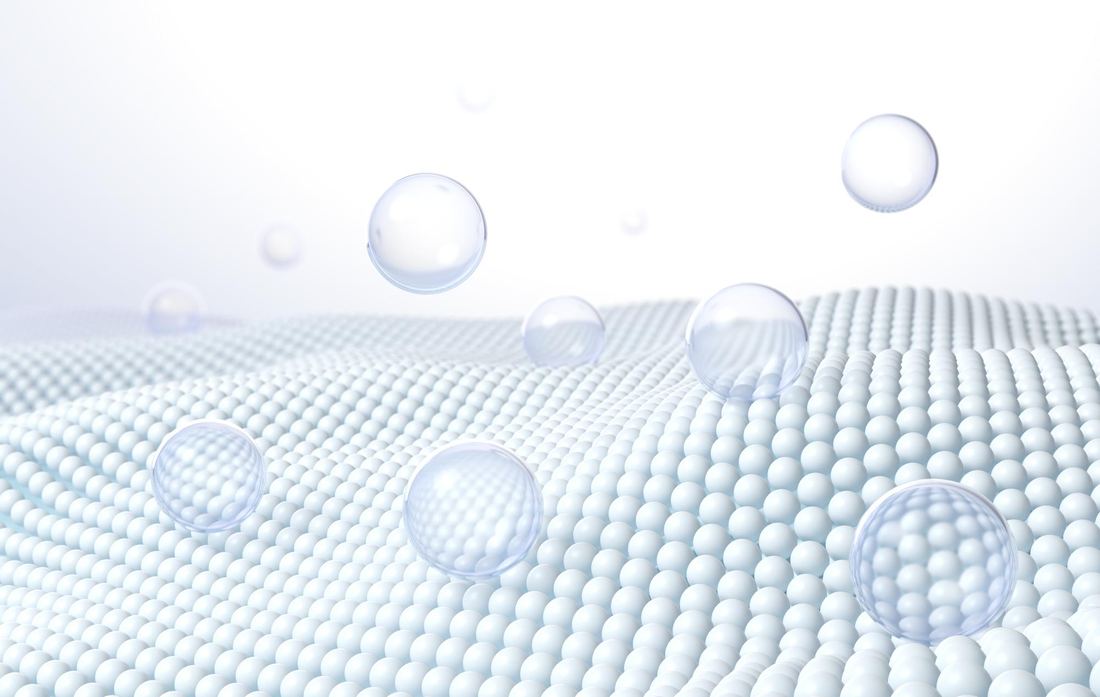
Partially hydrolyze collagen and it becomes gelatin. Its reversible sol–gel behavior and in-body degradability make it widely useful across pharmaceutical and medical materials.
- Pharmaceutical gradeConsistent properties such as viscosity and bloom for formulations
- Hemostatic & biodegradableMatrix forms for absorbable hemostats and biodegradable scaffolds
- Drug deliveryCarriers that hold an active ingredient and release it gradually
 Polynucleotide · DNA fragment
Platform 03 — PDRN · PN
PDRN
A signal molecule that awakens regeneration
PDRN (polydeoxyribonucleotide) is a purified salmon-derived DNA fragment known to support cell proliferation and microvascular formation at sites of injury.
- Regenerative signalContributes to a microenvironment that supports proliferation and angiogenesis
- Purity & specificationStandardized ingredient with managed molecular-weight distribution
- Safety firstApplication scope set on raw-material history and safety data
※ This description is a general, literature-based introduction and does not guarantee specific efficacy. Standards vary by application and follow the relevant regulations.
How We Work
From material to product
Data, not ideas, decides the next step. Only materials that pass four stages become product candidates.
Material design
Define targets for molecular weight, structure, and purity to suit the tissue.
Characterization
Measure and verify properties, biocompatibility, and stability quantitatively.
Safety evaluation
From raw-material history to preclinical testing, safety comes first.
Standardization & scale-up
Secure batch-to-batch consistency while scaling to production.
Quality
Trustworthy materials
come from standards
A regenerative material isn't finished by being made well once — it must be the same quality every time. AURIN manages that "sameness" with GMP-oriented processes and records.
- GMP-oriented processProcess design and operation aligned with manufacturing and quality standards
- Batch controlTraceability from raw material to finished product, verified by test records
- Specification standardsIn-house specifications for properties, purity, and stability
Safety
The first condition of any material that touches the body.
Reproducibility
The same quality, every time it is made.
Traceability
Records from raw material to finished product.
Standardization
Consistency managed by in-house specifications.
Next